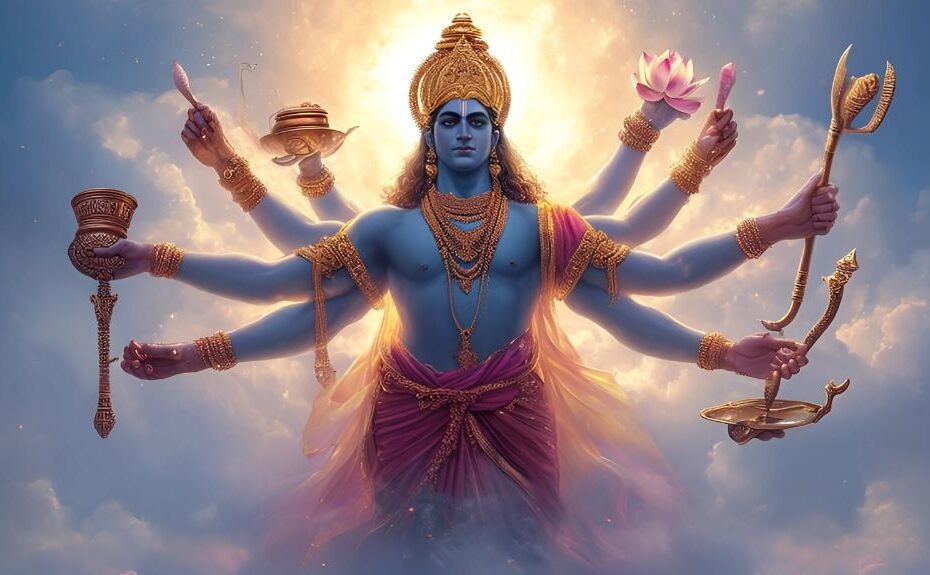
The Hindu deity Lord Ram, an avatar of Vishnu, is one of the most beloved figures in Hinduism. Known for his embodiment of righteousness, truth, and compassion, Lord Ram is often depicted with a standard human appearance, holding a bow and arrow as symbols of his strength, valor, and dedication to dharma (duty). This article delves into the symbolic significance of Lord Ram’s physical form, focusing on why he is traditionally depicted with only two hands and how this representation emphasizes his unique role in Hindu mythology.
Understanding Lord Ram’s Form in Hindu Iconography
Unlike other Hindu deities, such as Vishnu, who are often depicted with multiple hands symbolizing their divine abilities, Lord Ram is usually shown with only two hands. This distinction is significant, as each aspect of his portrayal holds symbolic meaning:
- Avatar of Dharma and Humanity: Lord Ram’s two-handed form represents his role as an earthly king and upholder of dharma. He was born as a human, with limitations and challenges like any other mortal. This form illustrates that he was bound by human constraints and duties, emphasizing his role as a relatable figure and the “Maryada Purushottam” or “Perfect Man.” His portrayal as a human king underscores his journey as a mortal who exemplified virtue and righteousness.
- Bow and Arrow Symbolism: In most traditional depictions, Lord Ram is shown holding a bow and arrow, which symbolize his commitment to protect righteousness and fight against evil. The bow and arrow are more than just weapons; they represent his readiness to defend dharma and stand up for justice. His two hands, bearing these weapons, signify his role as a warrior while highlighting his dedication to upholding moral order.
- The Contrast with Other Vishnu Avatars: Many forms of Lord Vishnu, such as Narasimha and Krishna, are shown with multiple hands to depict their omnipotent powers and divine attributes. In contrast, Lord Ram’s two-handed form emphasizes his embodiment of human virtues, humility, and adherence to duty, setting him apart from the other avatars who possess a more direct divine display of power.
Why Doesn’t Lord Ram Have Multiple Hands Like Other Deities?
In Hinduism, the depiction of gods with multiple hands is usually to symbolize their vast powers, qualities, and responsibilities. Vishnu’s avatars are varied, and each serves a specific purpose:
- Divine Duty vs. Human Duty: Other Vishnu avatars like Krishna or Narasimha fulfilled their divine purposes through direct supernatural powers, reflected in their multiple arms. However, Lord Ram’s duty was to show how one can lead an ideal life within human boundaries. His lack of multiple arms reinforces his mission to exhibit dharma within mortal limitations, guiding humans on leading a righteous life.
- Embodiment of the Ideal King: Ramayana’s portrayal of Lord Ram focuses on his ideal qualities as a son, husband, brother, and king. His life was meant to demonstrate adherence to values, even amid trials. The two-handed depiction reminds devotees that he faced all challenges as a mortal, teaching that righteousness is achievable through personal discipline and devotion, even without divine powers.
What Does Lord Ram’s Form Teach Us?
Lord Ram’s iconography, with his two hands, reminds us that the path to righteousness doesn’t require superhuman abilities. Through his earthly form, Lord Ram represents the ideal way of life—a life of discipline, devotion, and moral courage. His form teaches us that even while bound by human limitations, one can attain divinity through righteous actions, compassion, and truth.
The Unique Symbolism of Lord Ram’s Two-Handed Form
While Lord Ram’s two-handed form represents humanity, it doesn’t negate his divine nature. He is revered as a deity who embodies both the qualities of a mortal and the virtues of the divine. This unique representation bridges the human and the divine realms, showing that the qualities of an ideal person align closely with divine principles.
Conclusion
In Hindu iconography, Lord Ram is typically depicted with two hands, symbolizing his role as the ideal human and upholder of dharma. His two-handed form, in contrast to the multiple arms of other deities, emphasizes his journey as a mortal who overcame challenges through righteous actions and adherence to duty. For devotees, Lord Ram’s form offers a powerful reminder: one does not need superhuman abilities to achieve greatness but rather a commitment to values, strength of character, and compassion.
For engaging astrology content, please follow us on Instagram.