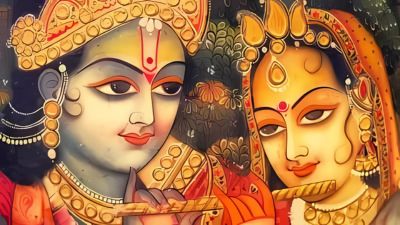
Introduction: Radha and Krishna represent one of the most celebrated and mystical love stories in Hindu mythology. Their union transcends conventional romance, as it symbolizes the purest form of love that goes beyond worldly constraints, including marriage. Despite their deep connection, they were never married. This profound relationship leaves many wondering: Why did Radha and Krishna, bound by such intense love, never become husband and wife?
1. Radha and Krishna’s Love Transcends Worldly Constraints
The love between Radha and Krishna is often regarded as the ultimate form of devotion, where Radha’s soul is bound to Krishna’s in a way that earthly commitments, like marriage, cannot contain. This divine love is a metaphor for the soul’s longing for union with the divine. According to Vedic philosophy, their bond is so transcendent that it doesn’t need the conventional institution of marriage.
2. Marriage: A Symbol of Worldly Bondage
In the Hindu tradition, marriage represents a commitment within the material world. Radha and Krishna’s relationship, however, symbolizes a union beyond the physical realm, where pure devotion replaces worldly commitments. Their relationship embodies the concept of bhakti, or unwavering devotion, where Radha’s love for Krishna signifies the soul’s eternal longing for spiritual unity with the divine.
3. The Symbolism of Radha as the Ultimate Devotee
In Vedic literature, Radha is often portrayed as the ultimate devotee, representing the soul’s undying love and devotion to God. By not marrying Krishna, Radha’s role as a symbol of selfless devotion remains untouched by any worldly bond. This is why, in many teachings, Radha is venerated as the supreme devotee, symbolizing pure, unconditional love and surrender to the divine.
4. Krishna’s Role as a Cosmic Deity
Lord Krishna’s divine purpose transcends individual relationships. His role in the cosmos goes beyond being a lover or husband; he embodies the universal soul, connected to all beings equally. Marriage to Radha would imply an exclusive relationship, which contradicts Krishna’s cosmic purpose as a deity connected to everyone. Their unbound love exemplifies how the divine love of God isn’t confined by human limitations.
5. Understanding the Leela (Divine Play)
The relationship between Radha and Krishna is also understood as a leela, or divine play. In Hindu tradition, Krishna’s interactions with Radha and the gopis (cowherd girls) are symbolic of God’s playfulness and divine love. Their story serves to show that true love doesn’t demand possession or formal commitments—it is enough for the soul to be in harmony with the divine.
6. The Influence of Radha and Krishna’s Love in Bhakti Tradition
The love story of Radha and Krishna has a profound influence on the Bhakti movement, which emphasizes personal devotion over ritualistic worship. Poets and saints across centuries, such as Meera Bai and Chaitanya Mahaprabhu, have celebrated Radha’s devotion to Krishna, seeing it as the highest form of spiritual love. This highlights that Radha and Krishna’s unwed relationship has inspired devotees to pursue a path of selfless, devotional love.
Conclusion: The Eternal, Unmarried Love of Radha and Krishna
The love between Radha and Krishna is a celebration of the soul’s longing for divine unity. Their relationship exemplifies that true love doesn’t require validation through worldly institutions like marriage. Instead, it thrives in the boundless realms of devotion and spiritual connection.
For engaging astrology content, please follow us on Instagram.