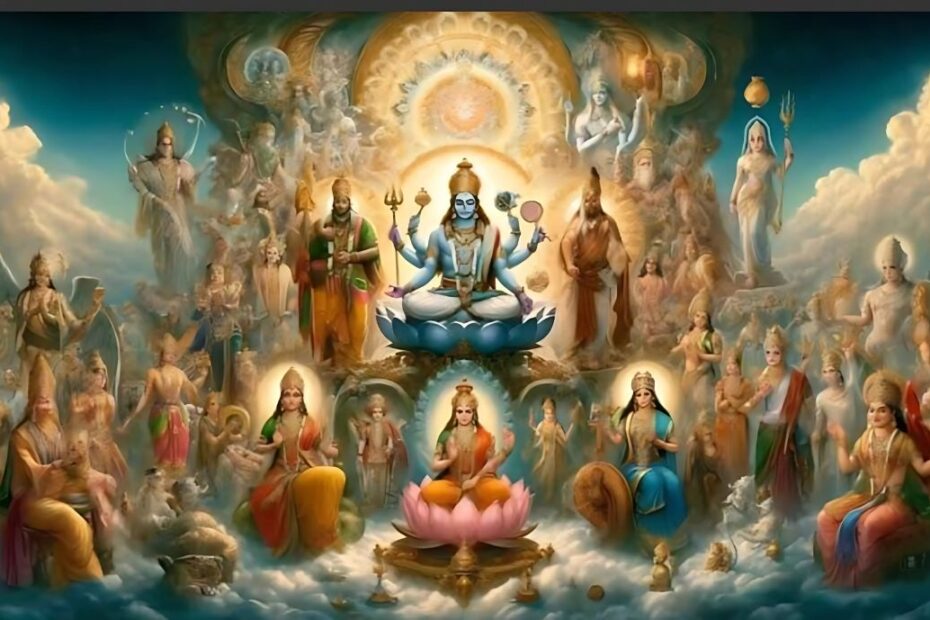
Hinduism, one of the world’s oldest religions, is richly adorned with myths, legends, and tales of divine interactions. Among these, the expressions of devotion between various Hindu deities stand out as profound examples of love, respect, and unity. These stories not only symbolize cosmic principles but also provide lessons on dharma (righteousness) and bhakti (devotion). Here, we explore the ways in which different Hindu deities express devotion to each other, creating an eternal harmony that inspires devotees.
1. Lord Shiva and Goddess Parvati: The Eternal Union
Lord Shiva and Goddess Parvati epitomize the perfect balance of masculine and feminine energies. Their relationship is a profound example of devotion and partnership. Parvati’s unwavering penance to win Shiva’s love exemplifies her devotion, while Shiva’s respect and affection for Parvati underline their mutual dedication. Together, they embody Ardhanarishvara, a composite form symbolizing the inseparability of male and female energies.
2. Lord Vishnu and Goddess Lakshmi: The Sustainers
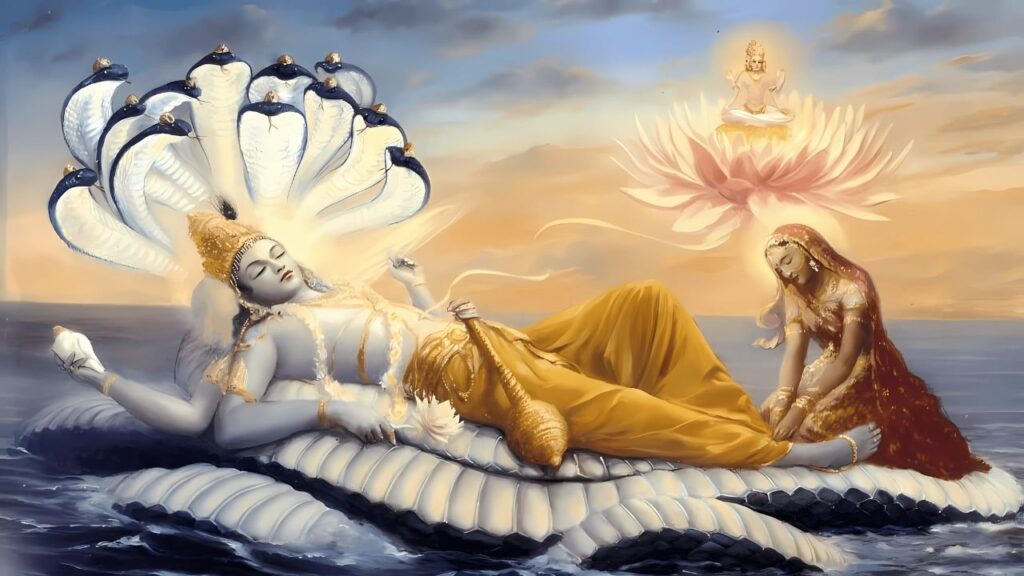
The divine couple Vishnu and Lakshmi exemplify sustenance and prosperity. Lakshmi’s constant presence by Vishnu’s side symbolizes her devotion to supporting him in maintaining cosmic balance. In turn, Vishnu’s protection of Lakshmi showcases his commitment to her well-being. Their union is celebrated in festivals like Diwali, where devotees seek their blessings for wealth and happiness.
3. Krishna’s Devotion to Radha and Rukmini
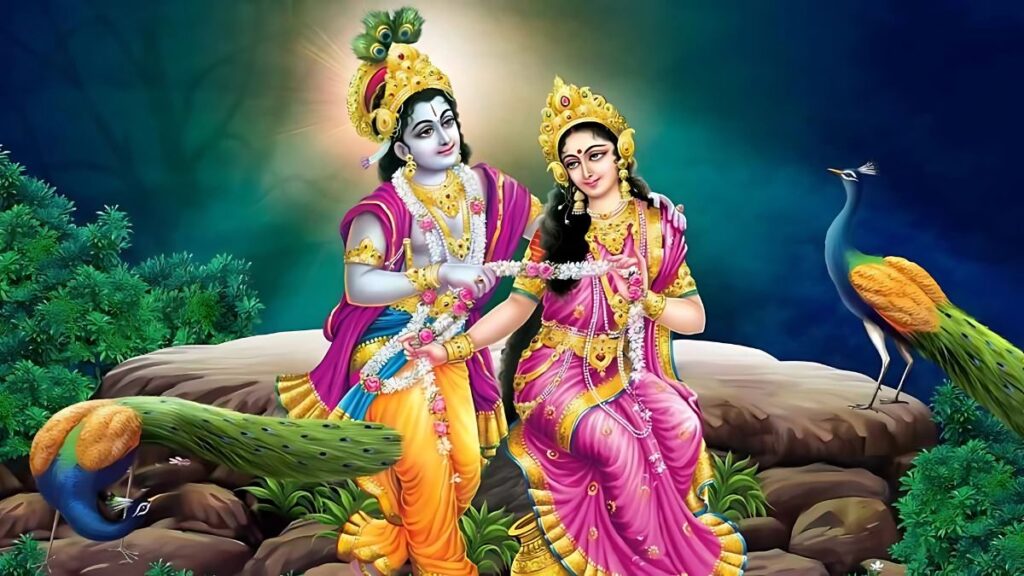
Krishna’s relationships with Radha and Rukmini reveal different aspects of devotion. Radha represents the soul’s intense love for the divine, while Rukmini symbolizes devotion within the bounds of marriage. Krishna’s playful and profound interactions with Radha highlight the bliss of divine love, while his unwavering care for Rukmini shows his devotion to duty and respect.
4. Lord Rama and Hanuman: Devotion Beyond Equality
The bond between Lord Rama and Hanuman is a testament to pure, selfless devotion. Hanuman’s unwavering loyalty to Rama is legendary, demonstrated in his tireless efforts to assist Rama in rescuing Sita. In return, Rama’s love and gratitude for Hanuman are seen in his blessings and recognition, exemplifying mutual devotion transcending hierarchies.
5. Saraswati, Lakshmi, and Parvati: Divine Sisters in Harmony
The trinity of Saraswati, Lakshmi, and Parvati showcases harmonious devotion among deities with distinct roles. Saraswati represents wisdom, Lakshmi embodies wealth, and Parvati symbolizes power. Despite their differing domains, their mutual respect and cooperation in cosmic functions highlight unity and collective devotion to dharma.
6. The Synergy Between Ganesha and Kartikeya
As the sons of Shiva and Parvati, Ganesha and Kartikeya often engage in playful yet meaningful interactions. Their famous contest to circle the world symbolizes the balance between wisdom and action. Ganesha’s victory, achieved through devotion to his parents, underscores the importance of intellect and respect in divine relationships.
7. The Reverence Between Shiva and Vishnu
Shiva and Vishnu, two of Hinduism’s principal deities, express mutual devotion in myriad ways. Stories like Vishnu transforming into Mohini to pacify Shiva or Shiva’s reverence for Vishnu as his savior in various legends highlight their mutual respect. The Hari-Hara form, a composite of Shiva and Vishnu, symbolizes their inseparable unity in maintaining cosmic harmony.
8. Durga and Her Manifestations: A Reflection of Devotion
Goddess Durga, a form of Parvati, expresses devotion to her divine purpose by battling and overcoming evil forces. Her manifestations—such as Kali and Shakti—demonstrate dedication to protecting dharma. Her relationship with Shiva further emphasizes the collaborative devotion among Hindu deities.
9. Devotion in the Dashavatara
The ten incarnations of Lord Vishnu, known as Dashavatara, highlight his devotion to preserving dharma across ages. In each avatar, Vishnu expresses his love for humanity and other deities through acts of sacrifice and guidance. For example, in his Rama avatar, he upholds dharma with the support of Hanuman and Sita, while in his Krishna avatar, he collaborates with Arjuna to restore justice.
Lessons for Devotees
The stories of devotion among Hindu deities serve as metaphors for human relationships. They teach:
- Unity in Diversity: Despite their distinct roles, deities respect and support each other to maintain cosmic balance.
- Selfless Service: Relationships like those between Rama and Hanuman inspire unconditional devotion.
- Balance: The harmony between Shiva and Parvati or Vishnu and Lakshmi underscores the importance of balance in partnerships.
- Respect for Purpose: Deities like Saraswati, Lakshmi, and Parvati exemplify honoring each other’s roles.
Conclusion
The mutual devotion among Hindu deities reflects the profound interconnectedness of cosmic principles. These tales inspire devotees to emulate the virtues of respect, love, and cooperation in their own lives. By understanding these divine interactions, we can deepen our spiritual practices and foster harmonious relationships. To explore more about divine devotion and cosmic harmony, check out our detailed astrology and horoscope insights at AstroCulture.
For engaging astrology content, please follow us on Instagram.