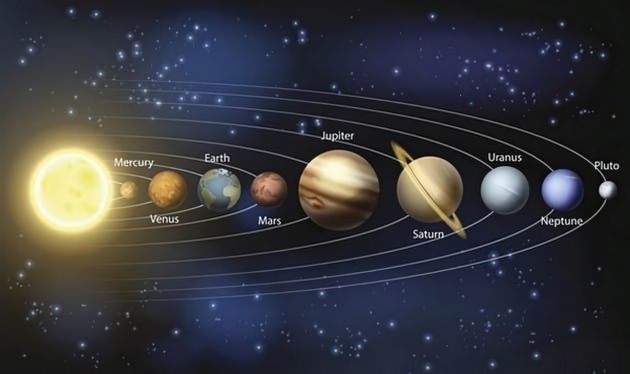
NASA’s ongoing search for habitable planets has led to the discovery of two Earth-sized planets orbiting the Teegarden Star, a faint red dwarf located just 12.5 light-years away. This remarkable find has fueled hopes for identifying potentially habitable exoplanets outside our solar system, igniting excitement within the scientific community. The Teegarden Star system offers a glimpse into a fascinating world beyond, one that may closely resemble Earth in size, orbit, and conditions.
The Discovery: Two Earth-Sized Planets Near Teegarden Star
The discovery of the two planets, Teegarden b and Teegarden c, came through the use of NASA’s Transiting Exoplanet Survey Satellite (TESS) in collaboration with various ground-based telescopes. These planets were detected using the radial velocity method, which measures the wobbling movement of the star as the planets orbit around it. What’s truly exciting is that both planets are believed to exist within the star’s habitable zone—where conditions could allow for liquid water, a key ingredient for life.
The Teegarden Star itself is one of the smallest and oldest stars known, with an estimated age of around 8 billion years. Its faint, cool nature means that even though these planets are located relatively close to it, they are still within the right temperature range to potentially support life. Given the system’s proximity to Earth, it offers an excellent opportunity for future study and exploration.
Teegarden b: The Most Earth-Like
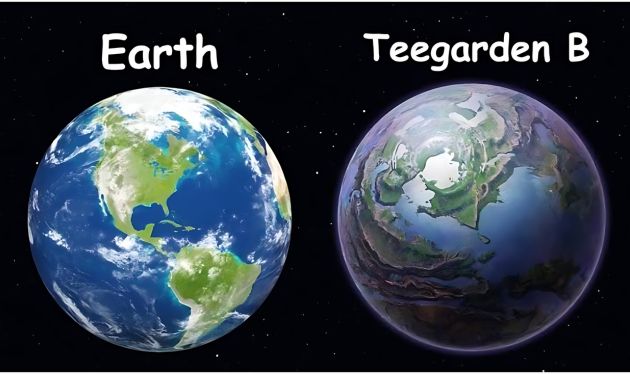
Teegarden b, the innermost planet, has emerged as one of the most Earth-like exoplanets discovered so far. It completes one orbit around the Teegarden Star in just 4.9 days and is located right in the middle of the star’s habitable zone. Its estimated surface temperature is similar to that of Earth, making it a prime candidate in the search for life beyond our planet.
What sets Teegarden b apart is its Earth Similarity Index (ESI), which measures how closely a planet resembles Earth in terms of mass, radius, and temperature. Teegarden b has an ESI score of 0.95, making it one of the most Earth-like exoplanets identified to date.
Teegarden c: A Cool Neighbor
Teegarden c, the second planet in this system, orbits its star in 11.4 days and is slightly farther away, leading to a cooler surface temperature. Although it may be chillier than Teegarden b, it still remains within the habitable zone, offering possibilities for liquid water and a stable atmosphere.
Its potential for habitability may not be as high as Teegarden b, but its proximity and size make it an intriguing target for further study. The discovery of two Earth-sized planets in such a nearby star system has reinforced the idea that small, rocky planets may be common in the galaxy, and some may host conditions suitable for life.
Implications of the Discovery
The discovery of Teegarden b and c has major implications for our understanding of the universe and the potential for life beyond Earth. Here are a few key takeaways:
- Proximity: The Teegarden Star system is one of the closest known to our solar system, making it a viable target for future space missions. Its distance of only 12.5 light-years means that with advancing technology, we could potentially send probes to this system in the future.
- Potential for Life: Both Teegarden b and c lie within the habitable zone of their star, with conditions that may allow for the presence of liquid water—a critical factor for supporting life. While there is no direct evidence of life, the mere existence of Earth-sized planets in this zone brings us one step closer to finding a second Earth.
- Age of the System: The Teegarden Star system is ancient, around twice the age of our Sun. This extended time frame raises interesting questions about the development of life on such planets. If life has developed on either of these planets, it could be significantly older and more advanced than life on Earth.
NASA’s Role in Exoplanet Discoveries
NASA’s role in discovering Teegarden b and c underscores the importance of missions like TESS, which are dedicated to finding new exoplanets. TESS has revolutionized our ability to locate potentially habitable planets by surveying nearby stars and identifying candidates for further study. With NASA’s James Webb Space Telescope set to launch, we will gain unprecedented insights into the atmospheres of exoplanets, including Teegarden b and c, to determine whether they hold signs of life.
What’s Next in the Search for Exoplanets?
The discovery of these two Earth-sized planets has set the stage for future exploration and study. Upcoming missions and advancements in technology may enable scientists to detect biosignatures, like methane or oxygen, in the atmospheres of these planets—potential indicators of life. The next steps will include detailed observations of Teegarden b and c’s atmospheres, surface conditions, and any potential moons or other bodies that may exist in this system.
Conclusion
The discovery of two Earth-sized planets near the Teegarden Star marks an exciting leap forward in our quest to find habitable worlds beyond our solar system. Teegarden b and c offer a tantalizing possibility of life-supporting conditions, especially given their proximity to Earth. As NASA continues its search for exoplanets, this discovery highlights the importance of continued exploration and the potential for discovering another Earth-like planet.
With future missions and technological advancements, the mysteries of the Teegarden Star system and its Earth-sized planets may soon be revealed. The findings could not only expand our understanding of the universe but also bring us closer to answering one of humanity’s oldest questions: Are we alone in the cosmos?
For engaging astrology content, please follow us on Instagram.