
In religious discussions, many often ponder how different faiths and deities connect or coexist. One intriguing question is whether Shiva, the Hindu god of destruction and transformation, can be considered part of the Holy Trinity associated with Christianity, particularly alongside Jesus Christ. While these two figures come from vastly different religious traditions—Vedic and Abrahamic—understanding their symbolic roles offers a deeper perspective on whether they share any common ground.
Understanding the Hindu Trinity (Trimurti)
In Hinduism, the concept of the Trimurti represents three principal deities: Brahma (the creator), Vishnu (the preserver), and Shiva (the destroyer). Shiva’s role as a destroyer is not negative but transformative—he clears the way for renewal, change, and the continuous cycle of life, death, and rebirth. His worshippers see him as the ultimate being who balances the universe.
The Christian Trinity: Father, Son, and Holy Spirit
Christianity also has its own Holy Trinity, comprising:
- God the Father (the creator),
- Jesus Christ (the son and savior),
- The Holy Spirit (God’s presence and guidance in the world).
Each part of the Christian Trinity serves a unique function in the faith, much like the Trimurti in Hinduism. The central figure of the Trinity, Jesus, is believed to be the savior of humanity, offering redemption and eternal life through his crucifixion and resurrection.
Comparing Shiva and Jesus
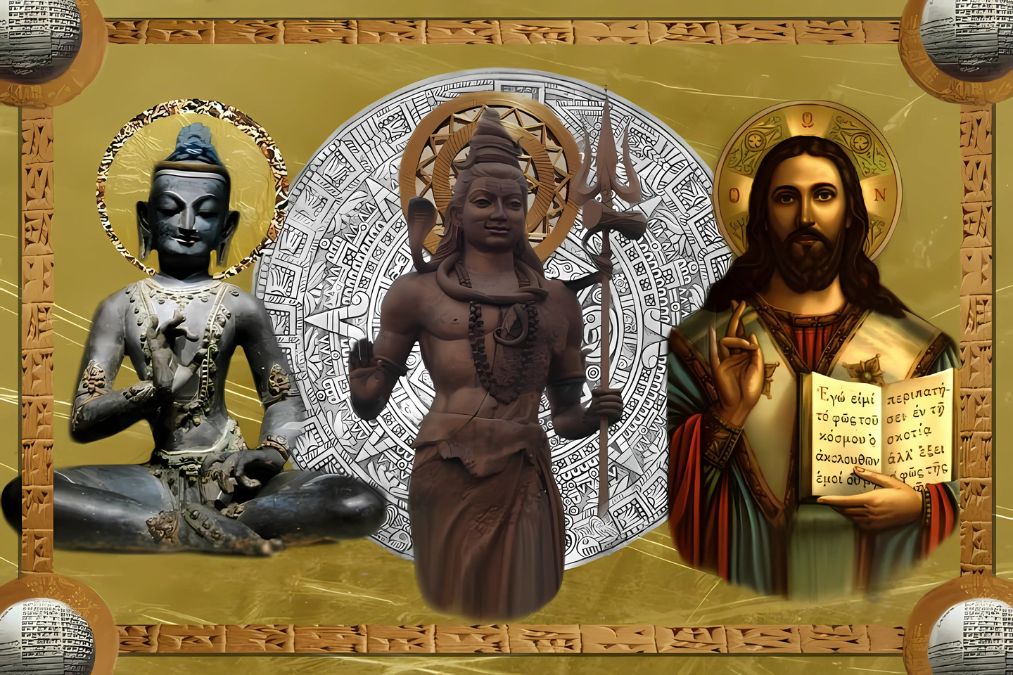
While both Shiva and Jesus are powerful figures in their respective religions, their roles differ substantially:
- Shiva, as part of the Hindu Trimurti, embodies destruction for the sake of rebirth and transformation.
- Jesus, within the Christian Trinity, represents salvation, forgiveness, and eternal life through his sacrifice.
Shiva’s role focuses on cosmic cycles, while Jesus’ teachings revolve around faith, compassion, and spiritual salvation. Despite these differences, both figures symbolize deep transformation—Shiva through destruction and Jesus through sacrifice.
Common Ground Between Shiva and Jesus
There are some fascinating parallels between the two figures that can suggest a form of philosophical or symbolic connection:
- Transformation and Renewal: Both Shiva and Jesus represent powerful forces of change. Shiva clears the old to make way for the new, while Jesus offers spiritual rebirth and salvation.
- Divine Compassion: Shiva is known for his grace and ability to forgive sins, much like Jesus, who sacrificed himself for humanity’s sins.
However, these symbolic similarities don’t mean Shiva can be considered part of the Christian Holy Trinity, as both figures belong to different belief systems and represent different theological principles.
Can Shiva Be a Part of the Holy Trinity?
From a doctrinal perspective, Shiva cannot be a part of the Holy Trinity. The Holy Trinity is a foundational concept in Christianity and is exclusive to the Christian faith, based on the relationship between God the Father, Jesus Christ, and the Holy Spirit. Introducing a Hindu deity like Shiva into this framework would fundamentally alter the nature of Christian theology.
However, from an interfaith perspective, some people find value in exploring the commonalities between figures like Shiva and Jesus. For those interested in spirituality beyond traditional boundaries, seeing both figures as representatives of divine power, transformation, and compassion can provide a broader understanding of the divine’s role in human life.
Conclusion
While Shiva and Jesus share certain symbolic qualities of transformation and compassion, they belong to very different religious traditions. The Holy Trinity in Christianity is a distinct theological concept, and while Shiva plays a central role in Hindu cosmology, he cannot be integrated into the Christian Trinity from a doctrinal standpoint. However, an interfaith exploration can offer fascinating insights into how different religions approach similar themes of divine transformation and salvation.
For engaging astrology content, please follow us on Instagram.