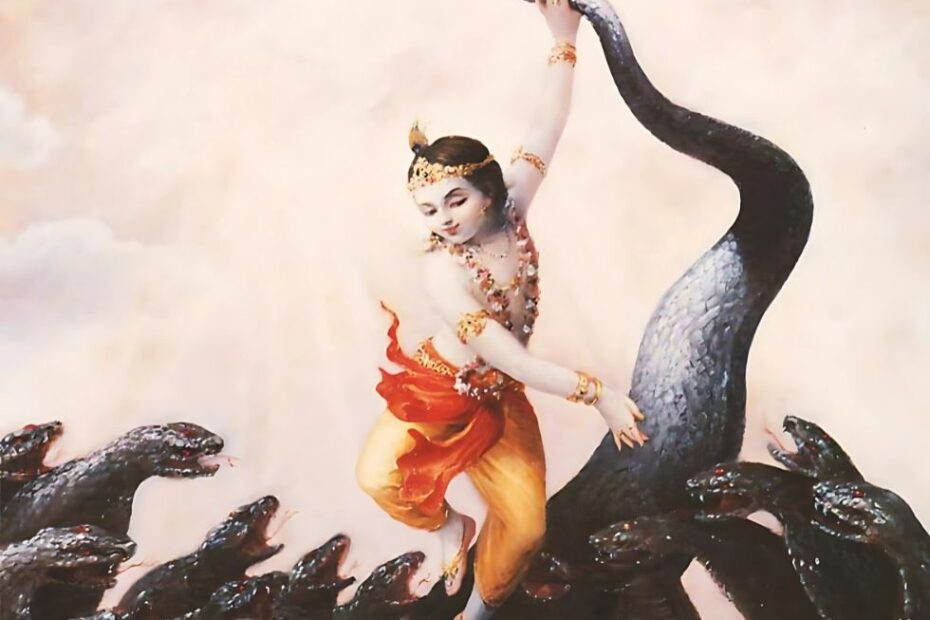
The tale of Krishna and Kaliya Naag is one of the most fascinating and spiritually significant episodes in Indian mythology. While Krishna is known for his courage and ability to eliminate evil, his decision to spare Kaliya Naag raises a profound question: Why didn’t Krishna kill Kaliya, the cruel serpent who terrorized the Yamuna river? Let’s delve into this captivating story and its hidden lessons.
The Story of Kaliya Naag
According to Srimad Bhagavatam, Kaliya Naag was a venomous serpent who inhabited the Yamuna River. His presence turned the river toxic, killing aquatic life and creating fear among the villagers of Vrindavan. When Krishna heard of this, he decided to confront Kaliya.
Krishna fearlessly dived into the Yamuna and engaged in a fierce battle with the serpent. As the villagers watched in terror, Krishna eventually subdued Kaliya by dancing on his multiple hoods, forcing the serpent to surrender.
However, unlike other instances where Krishna destroyed evil forces, he chose to spare Kaliya’s life. Instead, he banished Kaliya to the Ramanaka Dwipa (an island far away) with a promise to never return to Vrindavan.
Why Did Krishna Spare Kaliya Naag?
1. Respect for Kaliya’s Wife’s Devotion
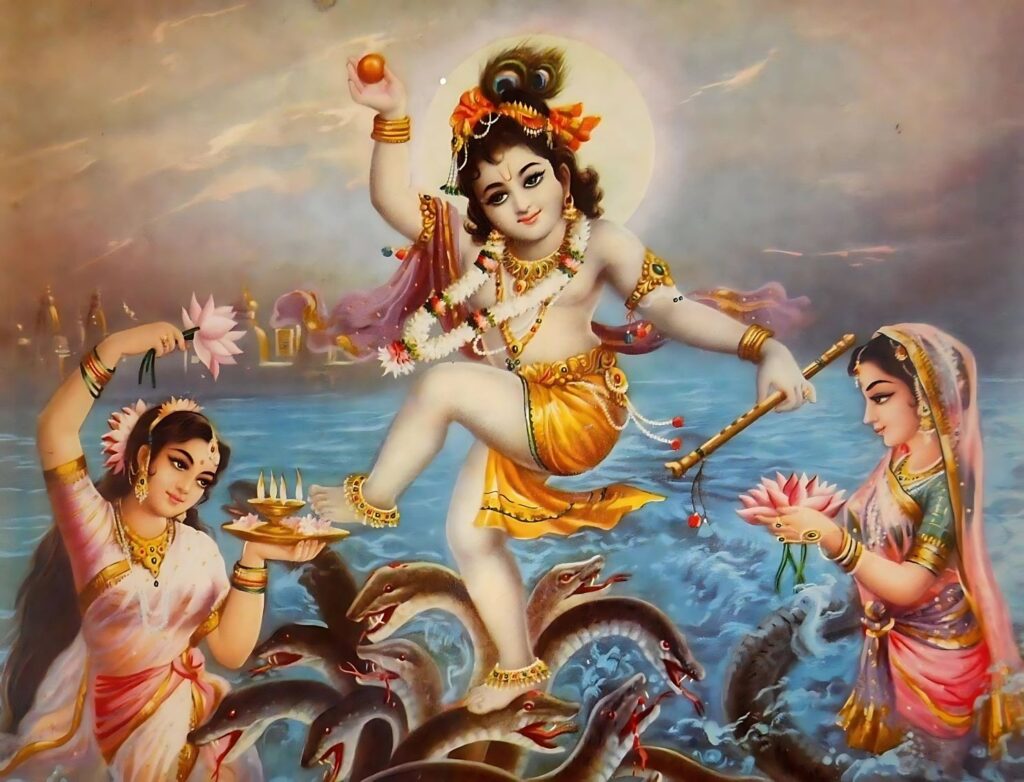
Kaliya’s wife, the Nagas, pleaded with Krishna to spare her husband’s life. She was a devoted follower of Lord Vishnu and begged for mercy. Krishna, being the compassionate deity, respected her devotion and granted Kaliya his life.
2. Redemption Over Destruction
Krishna’s actions were guided by the principle of Dharma. He sought to reform Kaliya rather than destroy him. By sparing Kaliya’s life and exiling him, Krishna gave the serpent a chance to redeem himself and live peacefully away from Vrindavan.
3. Astrological Significance
In Vedic astrology, serpents like Kaliya symbolize Rahu and Ketu, which represent karma, transformation, and challenges. Krishna’s decision to spare Kaliya reflects the idea of overcoming karmic obstacles through wisdom and restraint rather than violence.
4. Balance of Nature
Kaliya’s presence in the Yamuna disrupted the natural harmony of the region. By banishing him instead of killing him, Krishna restored balance without unnecessarily extinguishing life.
The Symbolism of Krishna and Kaliya
The Krishna-Kaliya episode is deeply symbolic:
- Krishna’s Dance on Kaliya’s Hoods
This represents the victory of good over evil and the control of ego (symbolized by the serpent’s multiple heads). - Yamuna’s Restoration
The river Yamuna signifies purity and spiritual energy. Krishna’s act of subduing Kaliya purifies the river, symbolizing the cleansing of negativity. - Sparing Kaliya’s Life
Krishna’s decision teaches forgiveness and the power of transformation. It highlights that even the cruelest beings can change when shown mercy.
Lessons from Krishna’s Actions
- Forgiveness is Divine
Krishna’s choice to forgive Kaliya shows that compassion can be more powerful than vengeance. - Devotion Has Power
The sincere prayers of Kaliya’s wife saved him, emphasizing the power of devotion in seeking divine grace. - Balance is Key
By restoring harmony to the Yamuna, Krishna reminds us of the importance of maintaining balance in nature and life.
Astrological Relevance of the Kaliya Episode
In astrology, the serpent is associated with Rahu and Ketu, which govern transformation, challenges, and karmic lessons. The episode reminds us that:
- Conquering negativity (symbolized by Kaliya) requires courage and divine intervention.
- Prayers, devotion, and spiritual practices can help mitigate the effects of malefic planets.
- Balance and restraint can help overcome karmic obstacles without unnecessary destruction.
Krishna’s Role as a Teacher
Krishna’s actions transcend the physical and delve into the spiritual realm. By sparing Kaliya, Krishna teaches us the importance of redemption, the value of life, and the need for balance.
In the words of Krishna from the Bhagavad Gita:
“Ahimsa Paramo Dharma” – Non-violence is the ultimate Dharma.
Conclusion
The story of Kaliya Naag and Krishna is not just an account of good triumphing over evil but also a lesson in compassion, redemption, and the power of devotion. Krishna’s choice to forgive Kaliya underscores his divine wisdom and the eternal message of love and balance.
For engaging astrology content, please follow us on Instagram.