
Astrology has long intrigued humanity, offering insights into personality, relationships, and life’s purpose. Among its many branches, sidereal astrology holds a unique place, diverging from the commonly practiced tropical astrology. But what exactly is a sidereal astrology chart, and how does it differ from other methods? Let’s delve into the details.
Understanding Sidereal Astrology
Sidereal astrology is a system that calculates planetary positions based on the actual observable constellations in the sky. Unlike tropical astrology, which aligns with the seasons and a fixed zodiac starting point, sidereal astrology accounts for the precession of the equinoxes. This means it considers the gradual shift of Earth’s axis over time, resulting in a zodiac that aligns with the current position of the stars.
Key Features of a Sidereal Astrology Chart
- Connection to Observable Stars: Sidereal astrology bases its zodiac on the physical constellations visible in the sky. This approach appeals to those who value astronomy and its connection to astrological practices.
- The Ayanamsa: The ayanamsa is the crucial difference between tropical and sidereal systems. It is the calculation of the gap between the two zodiacs, which adjusts planetary positions in a sidereal astrology chart.
- Focus on Real-Time Alignments: Sidereal charts emphasize the actual placement of celestial bodies at the moment of birth or a specific event, offering an alternative perspective on astrological influences.
Sidereal Astrology Chart vs. Tropical Chart
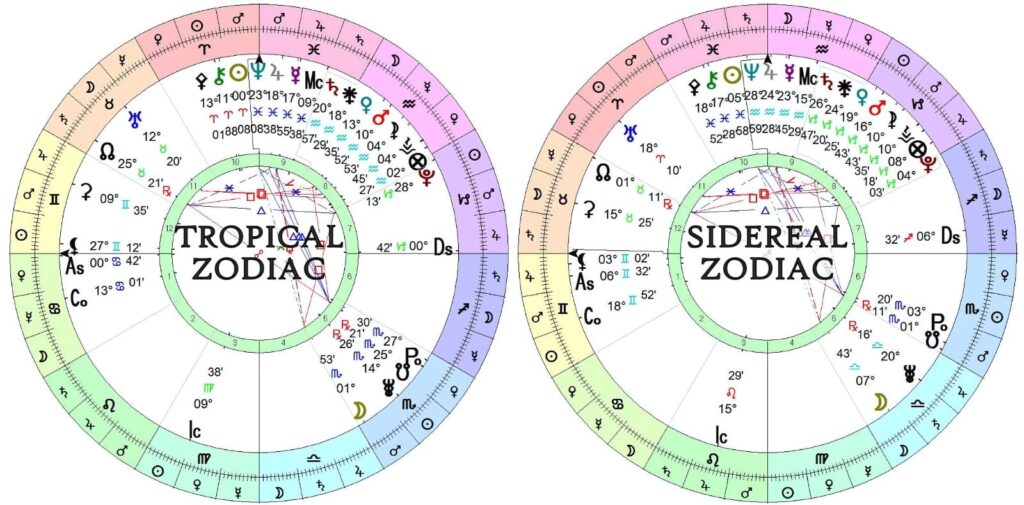
While both charts share common elements such as planets, houses, and aspects, their interpretations can differ significantly. For example, if you identify as a Taurus in tropical astrology, your sidereal sign might shift to Aries due to the 23-24 degree difference between the zodiacs.
How to Read a Sidereal Astrology Chart
- Determine Your Sidereal Zodiac Sign: Use your birth date, time, and location to calculate the positions of the sun, moon, and planets in the sidereal zodiac. Many online tools and astrologers specialize in this system.
- Interpret Planetary Placements: Each planet represents different facets of your life, such as communication (Mercury), love (Venus), and ambition (Mars). In sidereal astrology, these placements often shift, offering fresh insights into your character and destiny.
- Understand the Houses: Houses in a sidereal chart represent life areas, such as career, relationships, and health. The alignment of planets in these houses gives a nuanced perspective on life’s journey.
Benefits of Sidereal Astrology
- Astronomical Accuracy: For those who prefer a system rooted in observable phenomena, sidereal astrology provides a scientifically aligned framework.
- Fresh Perspectives: Shifting to a sidereal astrology chart can reveal aspects of your personality and potential that may feel more resonant or accurate.
- Connection to Vedic Astrology: Sidereal astrology is integral to Vedic astrology, a practice deeply rooted in ancient Indian traditions and often considered highly precise.
Applications of Sidereal Astrology
Sidereal astrology charts are used for various purposes, including:
- Daily Horoscopes: Offering insights into daily life aligned with real-time planetary movements.
- Compatibility Analysis: Evaluating relationships based on actual zodiac alignments.
- Career Guidance: Highlighting strengths and challenges in professional life.
Conclusion
Sidereal astrology charts provide a fascinating alternative to the more popular tropical system, emphasizing the importance of celestial alignments and their direct connection to the stars. Whether you’re exploring astrology for the first time or seeking a deeper understanding of your cosmic blueprint, sidereal astrology offers profound insights into your journey.
For engaging astrology content, please follow us on Instagram.