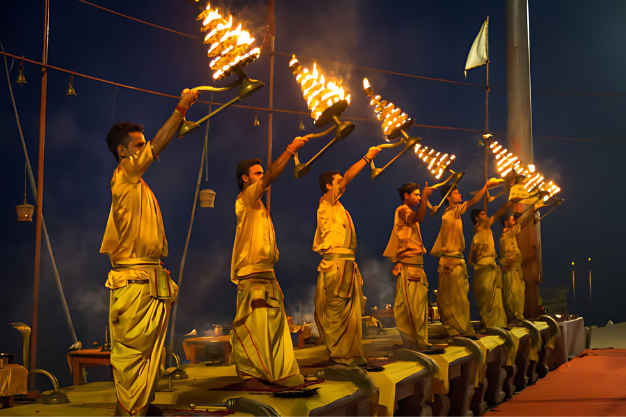
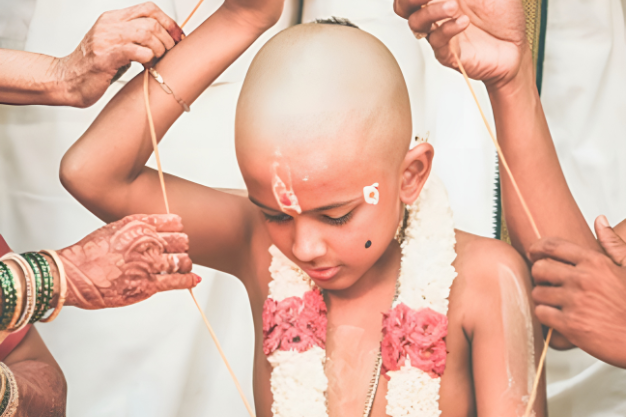
In Hinduism, the sacred thread holds deep spiritual significance. Known as “Janeu” or “Yajnopavita,” this sacred thread is more than just a symbol; it represents purity, responsibility, and the beginning of a spiritual journey. This thread ceremony, known as “Upanayana,” is a rite of passage for young boys, primarily in Brahmin, Kshatriya, and Vaishya communities, marking their entry into student life or Brahmacharya Ashrama.
An astrologer often determines the most auspicious time for this ceremony, based on the child’s kundli and aaj ka rashifa (today’s horoscope). This ensures that the divine energy aligns perfectly with the ceremony, ensuring positive outcomes for the individual. The thread is worn across the chest, signifying the connection between the mind, body, and soul.
According to astrology signs, the positioning of planets and their influence can also determine the significance of the sacred thread in one’s spiritual journey. Each house in the kundli or zodiac signs for today could reveal hidden energies that empower this spiritual practice.The “thread” symbolizes commitment to spiritual growth, moral discipline, and maintaining ethical values. As per horoscope signs for today, wearing the sacred thread can also enhance one’s spiritual vibrations, creating a more profound connection with the divine.
Yagyopaveeta/Janeu (The Yellow Thread)
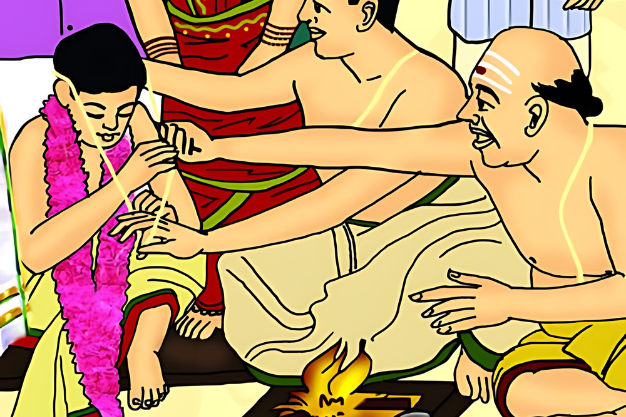
In fact, most Brahmins wear the sacred thread across their chest. This tradition is observed during the Upanayana ceremony, which symbolizes leading a disciple to the Guru. The Yagyopaveet (sacred thread) has three strands, each twisted with three cords and tied with one knot. The word “Yagyopaveet” is a combination of “Yagya” (the best action), “Up” (near), and “Veet” (obtained or desired).
Wearing the Yagyopaveet represents the desire to do one’s best and marks the beginning of a spiritual journey. During this ceremony, mentors teach the Gayatri Mantra, one of the most sacred mantras, which seeks enlightenment and knowledge of the Supreme Reality. Chanting the Gayatri Mantra while wearing the Yagyopaveet is believed to help attain spiritual liberation.
Meaning
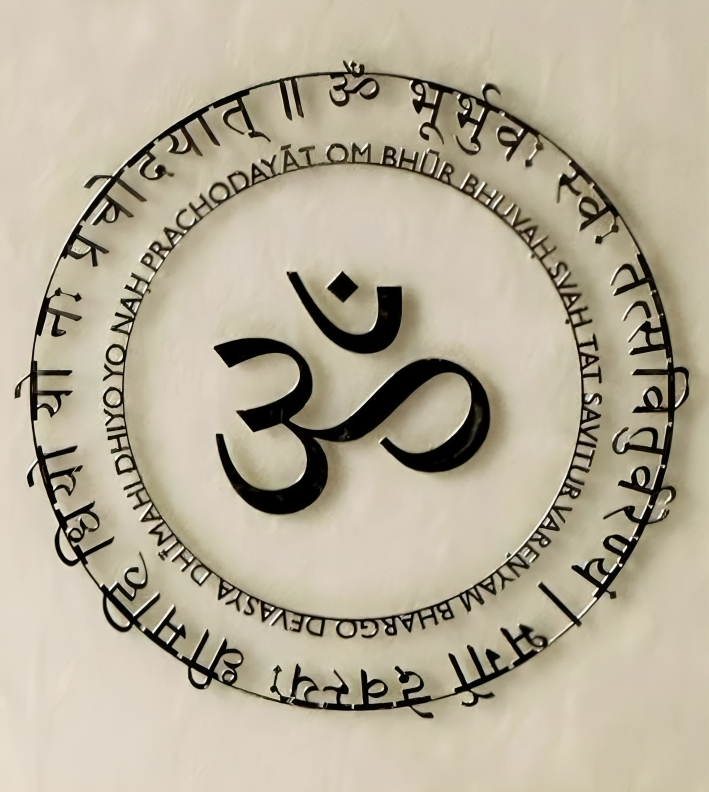
O Divine Creator, the essence of the Earth, the heavens, and beyond. We meditate on your supreme, radiant light. May you inspire and guide our intellect toward the path of truth and righteousness. This mantra is a universal prayer that calls upon divine energy to lead one towards spiritual wisdom and inner clarity.
Yajnopavita is a sacred thread with three strands and a knot resembling a sitting cow. These strands symbolize the three Vedas, while the knot represents the Atharva Veda. It also signifies the three life stages: Brahmacharya, Grihastha, and Vanaprastha, along with the three sacred fires: Garhapatya, Dakshinaagni, and Ahavaniya.
The thread is worn over the left shoulder, passing over the heart, and ending in a knot at the back. The left shoulder signifies life’s burden with tolerance, the heart represents faith and determination, and the back symbolizes commitment. Thus, Yajnopavita stands for purity, dedication, courage, and perseverance.
In-depth Details
After initiation, the beginner is expected to perform Sandhya Vandana and Agnikaarya throughout life. Sandhya Vandana is the worship of the Sun God at dawn, noon, and dusk, traditionally performed by the Dvija communities of Hindus, meaning “salutation to twilight or solar noon.
It also involves offerings to the Fire God, prayers for longevity, intelligence, competence, and fame. Sandhyavandana includes Achamana (sipping water for purification), Pranayama (breathing exercises), and Gayatrijapa, among others. Yagyopaveeta is a vital ceremony in a man’s life, symbolizing his spiritual baptism in Hinduism. The sanctity of the thread, or Janeu, is paramount.
KALAWA/MAULI (The Red/Yellow/Orange/Saffron Thread)
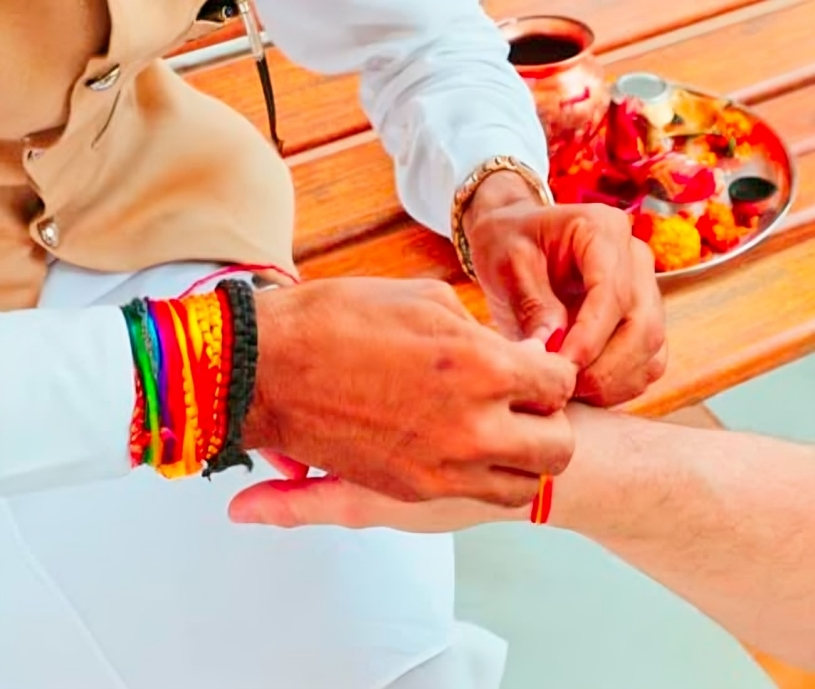
According to Hindu mythology, in the Vamana Avatar, Lord Vishnu pushed King Bali into the underworld and tied a red thread (kalawa/moli) on his wrist to grant him immortality. This started the tradition of tying a red thread on people’s wrists for long life. When tying the kalawa, it should be done with the palm facing up, and three knots are tied. Inside the wrist, near the palm, there are three important veins, or Naadis.
Split Meanings
Each Naadi corresponds to one of the three body Doshas: Vata (movement and nerves), Pitta (digestion and energy), and Kapha (nutrient transport). The Kalawa’s three knots apply pressure on these Naadis, helping keep the body balanced and free from related ailments.
Kalawa, a sacred thread in Hinduism, comes in red, yellow, and orange. It’s tied on both men and women during important ceremonies, symbolizing spiritual commitment and auspicious actions. “Mauli” in Sanskrit means “crown,” denoting its significance.
Lord Shiva is called Chandramauli, meaning “crowned with the moon,” due to the crescent moon on his head. This red and yellow cotton thread is believed to protect against negative energy. It’s tied around the wrist seven times during or after the prayer ceremony.
The thread is tied by the Guru or elders, often grandparents, while reciting Sanskrit mantras. This practice helps ward off negativity and is a revered tradition in Hindu ceremonies.
येन बद्धो बलीराजा दानवेन्द्रो महाबल:।
तेन त्वामनुबध्नामि रक्षे माचल माचल।।
Meaning
(The Gayatri Mantra is a sacred Vedic chant: “Om Bhuh, Om Bhuvaha, Om Svah, Tat Savitur Varenyam, Bhargo Devasya Dhimahi, Dhiyo Yo Nah Prachodayat.” It translates to: “We meditate on the divine light of the Supreme Being who created the universe. May this divine light illuminate our minds and inspire us towards wisdom and enlightenment.” This mantra is a prayer for the awakening of higher consciousness and spiritual growth.)
Reciting sacred mantras is believed to infuse the thread with positivity and invoke a pure state in individuals. This practice protects the wearer from negativity, bad influences, dangers, diseases, and enemies.
Additionally, tying the Mauli is thought to bring blessings from the Tridev—Brahma, Vishnu, and Mahesh—and the Tridevi—Lakshmi, Saraswati, and Durga. From Brahma, one receives fame; from Vishnu, the strength to combat evil; and from Shiva, the power to overcome negative qualities.
Mythological Depth
From Goddess Saraswati, we receive knowledge; from Goddess Lakshmi, we gain prosperity; and from Goddess Durga, we obtain power.
In the Mahabharata, Kunti tied a red thread (Mauli) on Abhimanyu’s right wrist as a protective shield during the war. None of the warriors could defeat him until a mouse nibbled away the thread, causing his protection to fail and leading to his demise.
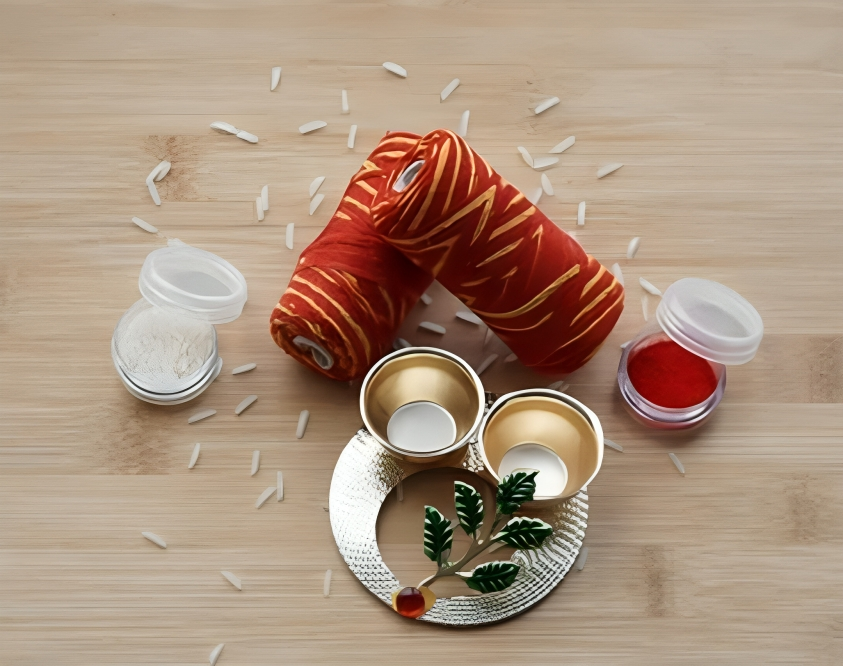
There’s a scientific reason behind tying Mauli on the wrist. Human anatomy shows that the wrist has a network of important veins. Wearing the Mauli thread improves blood circulation and helps balance the three Doshas: Vata, Pitta, and Kapha, ensuring no disruption in the body’s systems.
Wearing Mauli can help protect against serious diseases like paralysis, diabetes, and heart disease. According to acupressure, Mauli maintains strong blood flow, which supports a robust immune system and overall health.
Black Thread

According to Indian mythology, black thread absorbs negative energies and is often worn around the waist. It helps manage weight and waist size by aiding digestion. If the thread becomes loose, it indicates weight loss, while if it tightens, it suggests weight gain. It also supports proper elimination.
Wearing black thread on the waist strengthens the intestines, improving digestion and bowel movements. It enhances kidney and bladder function and supports spinal health by stabilizing the lumbar region. This helps prevent lower back pain, spinal issues, and slipped discs by maintaining spinal fluid balance.
(“His Trishul symbolizes the control of mind, intellect, and ego, helping you work more effectively and maintain composure.”)
These were some key details about the importance of a “thread” in Hinduism. You might also enjoy reading about the Moon and its spiritual impacts in astrological houses.
Consult the best astrologer in India and get guidance to find the right path in your life.
For engaging astrology content, please follow us on Instagram.