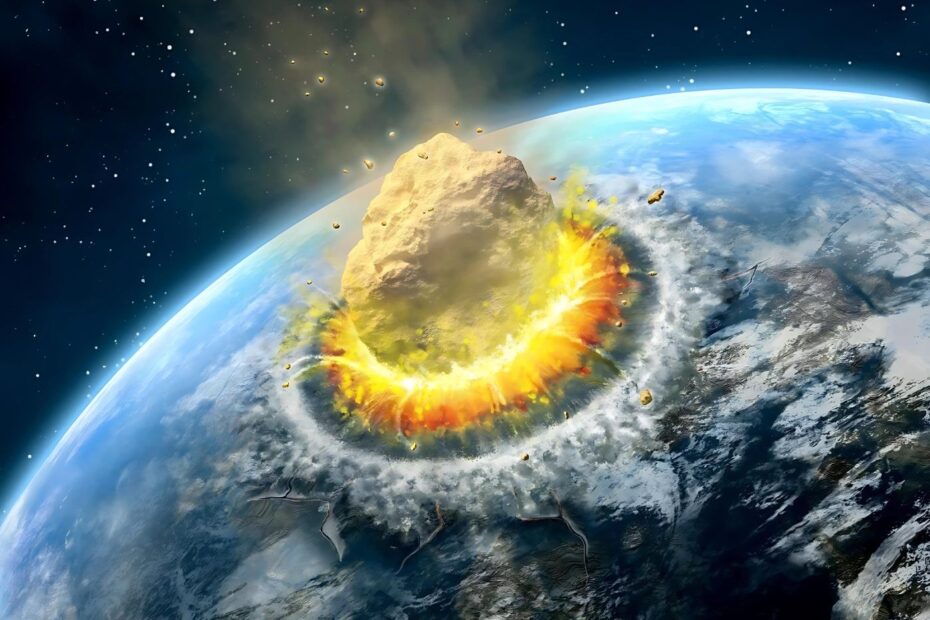
Jupiter, the gas giant of our solar system, is no stranger to massive collisions. Its enormous gravitational pull makes it a prime target for asteroids and comets, which are frequently attracted to its atmosphere. Recently, astronomers have observed what they believe to be another asteroid impact on Jupiter, reigniting discussions about the role these collisions play in shaping not only Jupiter but also the wider solar system. But what exactly happened? And why is it important for both astronomy and our understanding of planetary evolution?
What Happened to Jupiter?
In the latest event, amateur astronomers recorded a bright flash on Jupiter, leading many to speculate that the planet was hit by an asteroid or a comet. These types of impacts are not uncommon for the gas giant, which acts as a cosmic shield for the inner planets by absorbing or deflecting space debris. This recent event is a reminder of the dynamic and sometimes violent nature of our solar system.
Why Is Jupiter So Prone to Collisions?
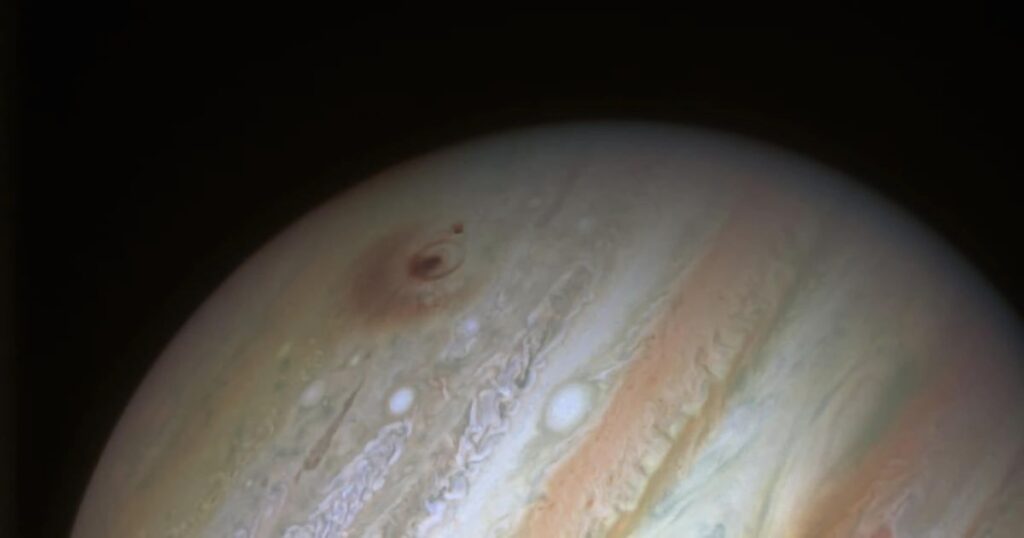
Jupiter’s massive size and strong gravitational field make it a natural magnet for asteroids and comets. In fact, Jupiter’s gravity is so powerful that it significantly affects the orbits of objects within the asteroid belt and beyond. Over the years, astronomers have observed multiple impact events, including the famous collision of Comet Shoemaker-Levy 9 in 1994, which left visible scars on the planet for months.
The Significance of Asteroid Impacts on Jupiter
Protecting Earth and the Inner Planets
One of Jupiter’s most critical roles in the solar system is its function as a “cosmic vacuum cleaner.” By attracting or capturing space debris, Jupiter reduces the likelihood of such objects colliding with Earth or other inner planets. This is vital for the preservation of life on Earth, as asteroid impacts can have catastrophic consequences.
Understanding Planetary Evolution
Each asteroid that crashes into Jupiter provides astronomers with valuable data. These impacts help scientists understand the composition of the impacting objects, the dynamics of planetary atmospheres, and even the history of our solar system. The way Jupiter responds to these collisions also offers insights into the planet’s atmospheric layers and gravitational effects.
Asteroids and Comets: A Glimpse Into the Past
Asteroids and comets are often considered relics from the early solar system. Their collisions with Jupiter, therefore, serve as opportunities to study material that has remained largely unchanged since the formation of our planetary neighborhood. Analyzing the aftermath of these impacts can reveal information about the conditions that existed billions of years ago.
Can We Predict Future Impacts?
Thanks to advancements in astronomy and technology, astronomers are becoming more adept at detecting and tracking potential asteroid and comet threats to Jupiter and Earth. However, predicting exactly when and where an object will hit Jupiter remains a challenge due to the chaotic nature of space.
Amateur astronomers play a crucial role in these discoveries. Many of the recent observations of asteroid impacts on Jupiter were first detected by dedicated sky watchers using telescopes from Earth. With increasing global interest in astronomy, it’s likely that more of these impact events will be observed and recorded in the future.
How Do These Collisions Affect Jupiter?
Despite the size of some of the asteroids that hit Jupiter, the planet’s thick atmosphere absorbs much of the energy from these impacts. This prevents the planet from sustaining permanent damage, unlike Earth, where a large asteroid impact could be catastrophic. Instead, these collisions often result in bright flashes and temporary changes in the planet’s atmosphere, such as the creation of dark spots or debris clouds that can be observed for weeks or even months.
However, even though these events are not destructive for Jupiter, they still offer a dramatic reminder of the scale and power of the forces at work in our solar system.
Conclusion: Jupiter, the Solar System’s Guardian
Jupiter’s frequent encounters with asteroids and comets continue to fascinate astronomers and space enthusiasts alike. Each impact provides a new opportunity to learn more about the forces that shape not just Jupiter, but the entire solar system. As the cosmic guardian of the inner planets, Jupiter’s ability to attract space debris plays a crucial role in the protection of Earth and our celestial neighbors.
So, did Jupiter get slammed by an asteroid? The evidence certainly suggests so. And while the gas giant takes these hits in stride, each impact reminds us of the complex and interconnected nature of the universe we inhabit.
For engaging astrology content, please follow us on Instagram.